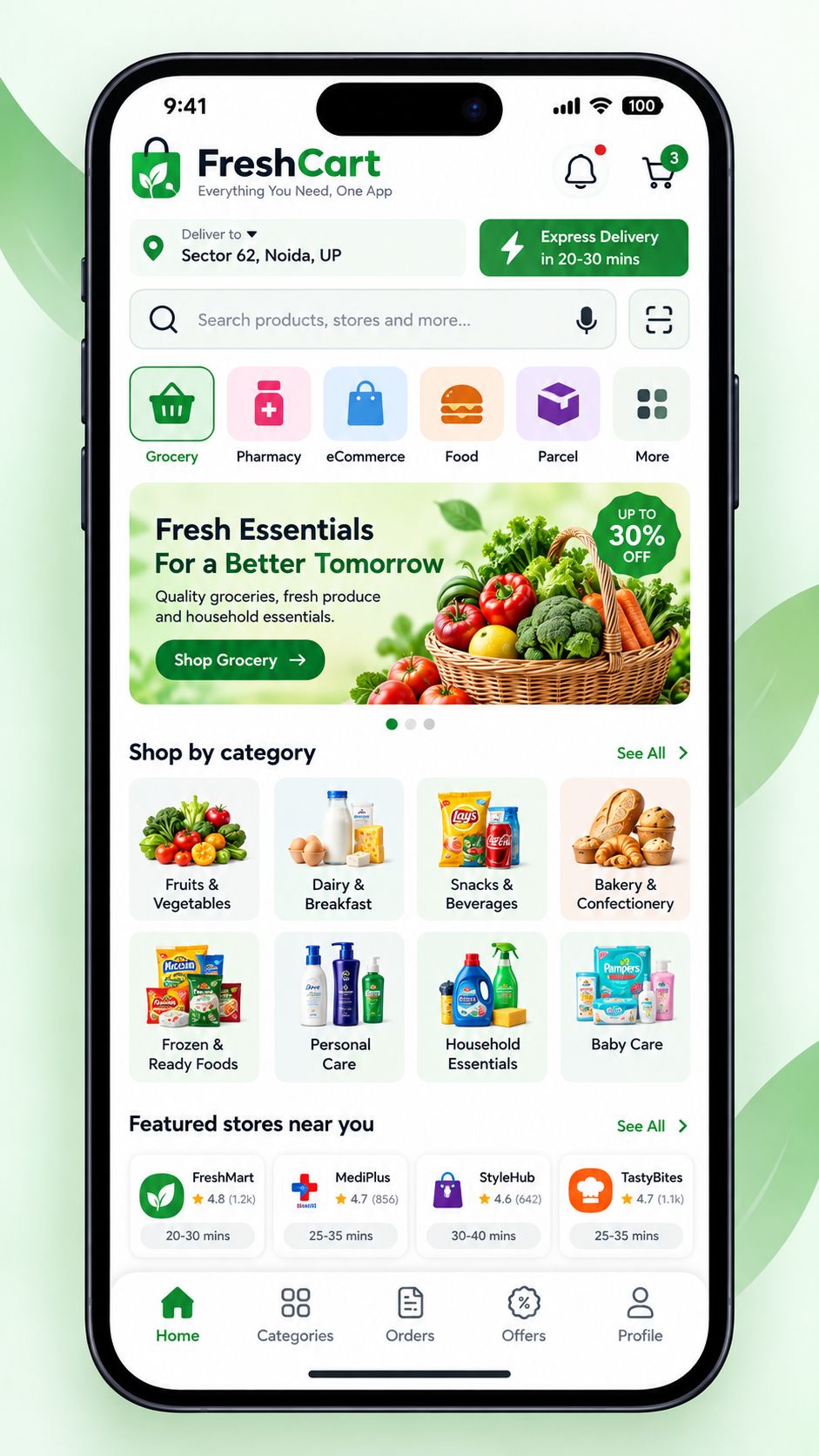
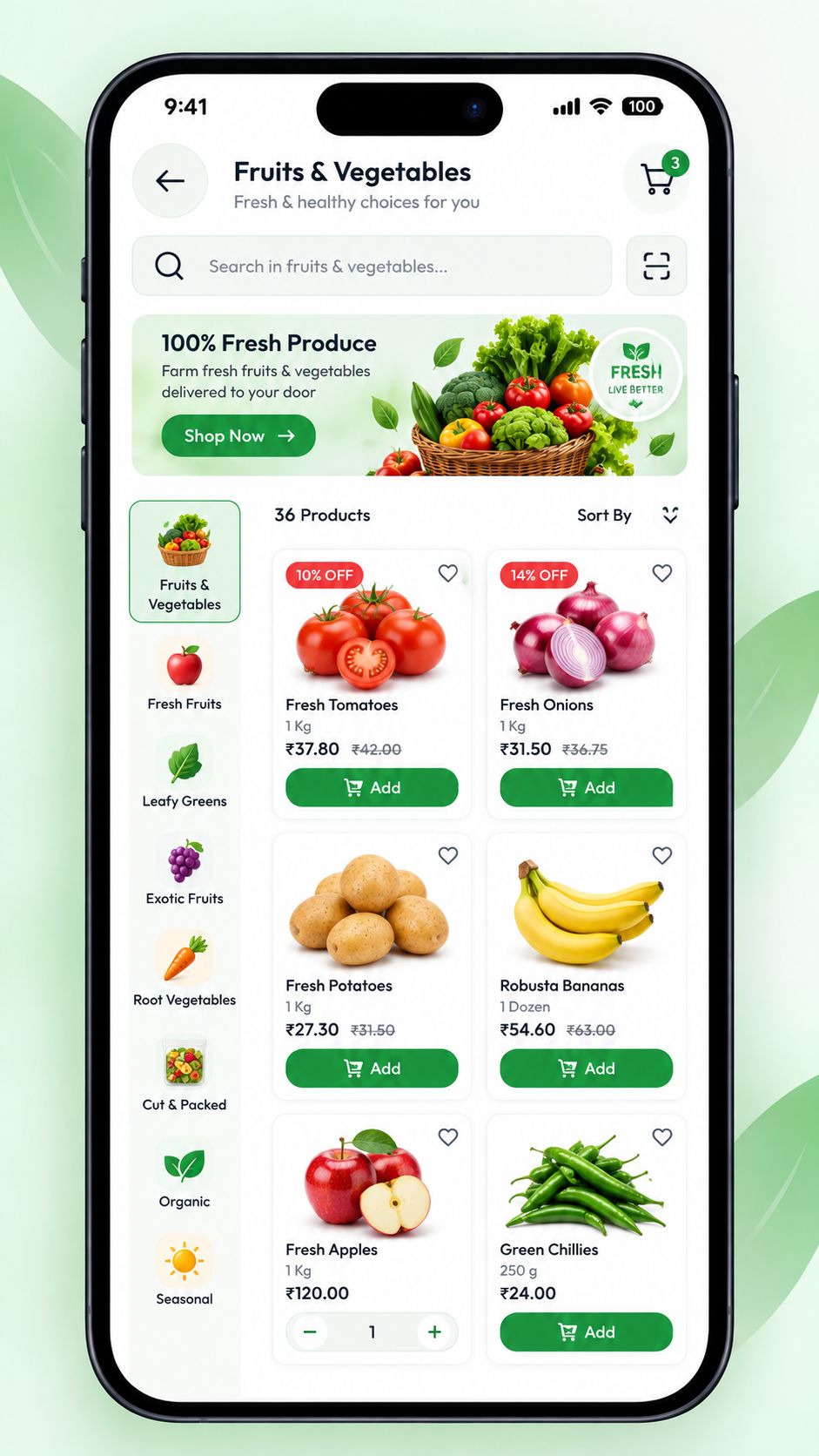
Give every seller the tools they need to operate independently while keeping marketplace operations under centralized control.
Products, categories, variants and attributes.
Stock levels and low-stock visibility.
Process and fulfill store orders.
Connect online and offline sales.
Flexible marketplace commission controls.
Revenue, orders and business insights.
A structured fulfillment workflow keeps customers, sellers, delivery partners and administrators aligned.
Give administrators a complete operational view of the marketplace, with tools for sellers, products, orders, customers, delivery, commissions, payments and reporting.
Support localized marketplace content and user experiences.
Flexible online payment and cash-on-delivery workflows.
Create promotional campaigns, coupons and scheduled offers.
Build recurring customer membership and subscription experiences.
Connect physical store sales with the online marketplace.
Understand revenue, sales, orders, sellers and marketplace activity.
Configure service areas, charges and delivery rules.
Allow customers to collect orders directly from stores.
Keep customers, sellers and delivery teams updated.
A connected architecture keeps every marketplace role synchronized while allowing each platform to focus on its own workflow.
Authentication โข Orders โข Products โข Payments โข Delivery โข Users โข Business Logic
The architecture can be adapted to the business requirements, integrations, infrastructure and scale of the marketplace.
Whether you're launching a grocery marketplace, food delivery platform, local commerce network or multi-vendor shopping ecosystem, we can help turn the concept into a complete digital product.